
Parful Events
A memorial golf tournament the family can see, every year
A memorial tournament starts with a person, not a budget. Someone who loved the game is gone, the people who loved them want a day on the course in their name, and usually there is a cause the money should go to. Parful Events gives the day one public page for the story, one place for the money and a way to run it again next year.
For the daughter running the tournament her father played in for twenty years, the college teammates who want an annual round for the one they lost, and the workplace that turned a retirement party into a memorial and a scholarship. Nobody who registers, sponsors or donates needs a Parful account; only the organizer signs in.
The page carries the story
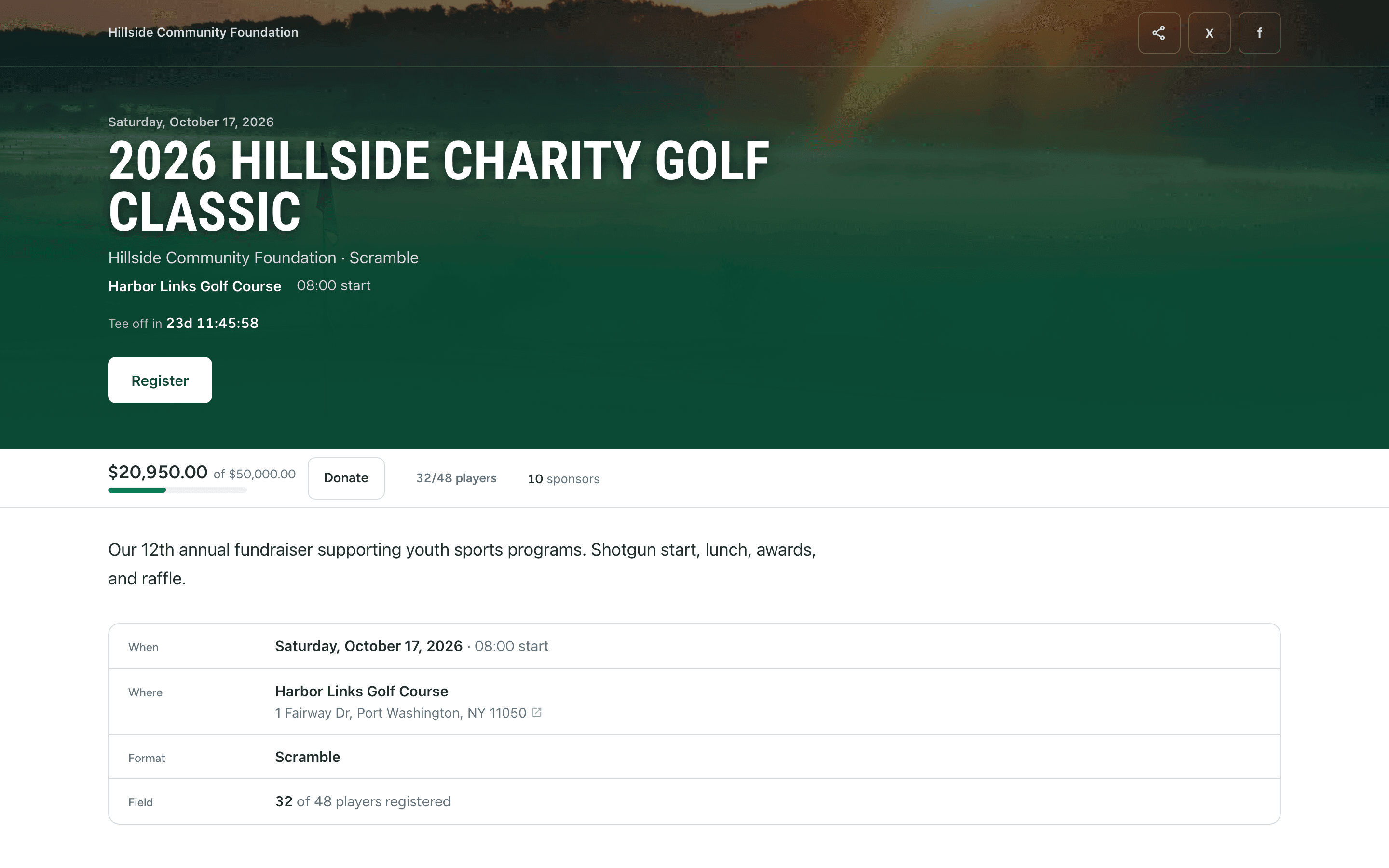
Every event gets a public page, and for a memorial tournament the page is the tribute. The organizer writes the description, which is where the story goes: who the person was, why this course, what the money supports. A header image sits above it, usually a photograph, and a published goal shows as a raised bar with a countdown to the date. Those are standard parts of every event page; there is no memorial-specific feature, and none is needed.
Below the story sit the packages: foursomes, single spots, dinner seats for people who will come to the meal but not play, and add-ons. Donations sit beside them, which matters more here than at most events, because many of the people who loved the person will not play golf. They open the page from the family’s message and give in one tap.
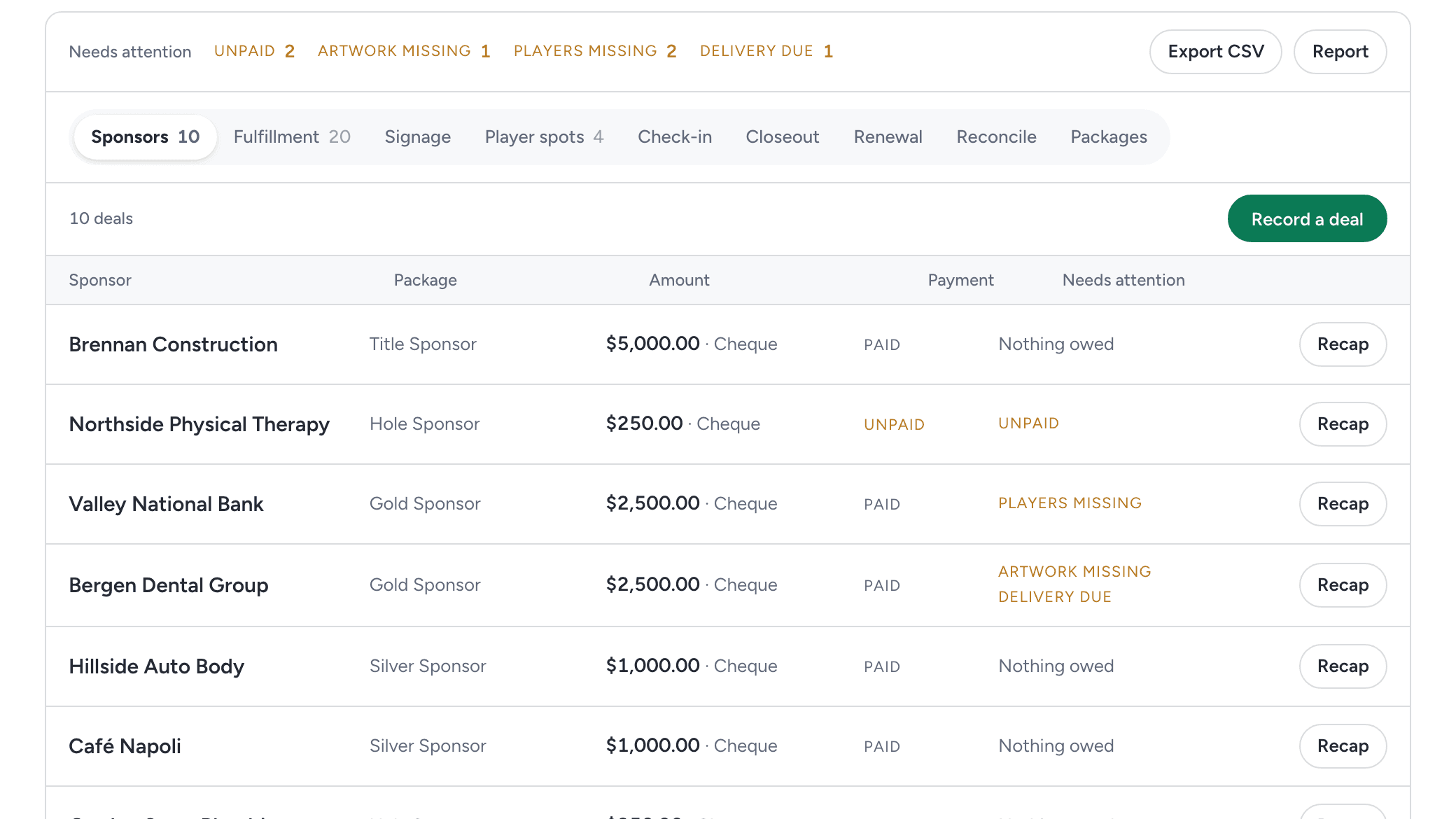
- Sponsors are often local businesses that knew the person: packages state what each level includes, a sponsor can bring players, and each deal is tracked to paid with a portal for the logo
- A cap and a waitlist size the field; the organizer registers an uncle who wants to pay by check
- Email blasts and scheduled reminders to everyone registered
On the day: let the volunteers run it
The organizer should be able to be present at their own event, so the day is built to be run by volunteers with a phone each. The check-in desk finds a player by name or scans their confirmation, shows any balance owed and records cash or a check taken there. Groups and pairings come from the registrations, the tee sheet prints, and a shotgun start assigns holes.
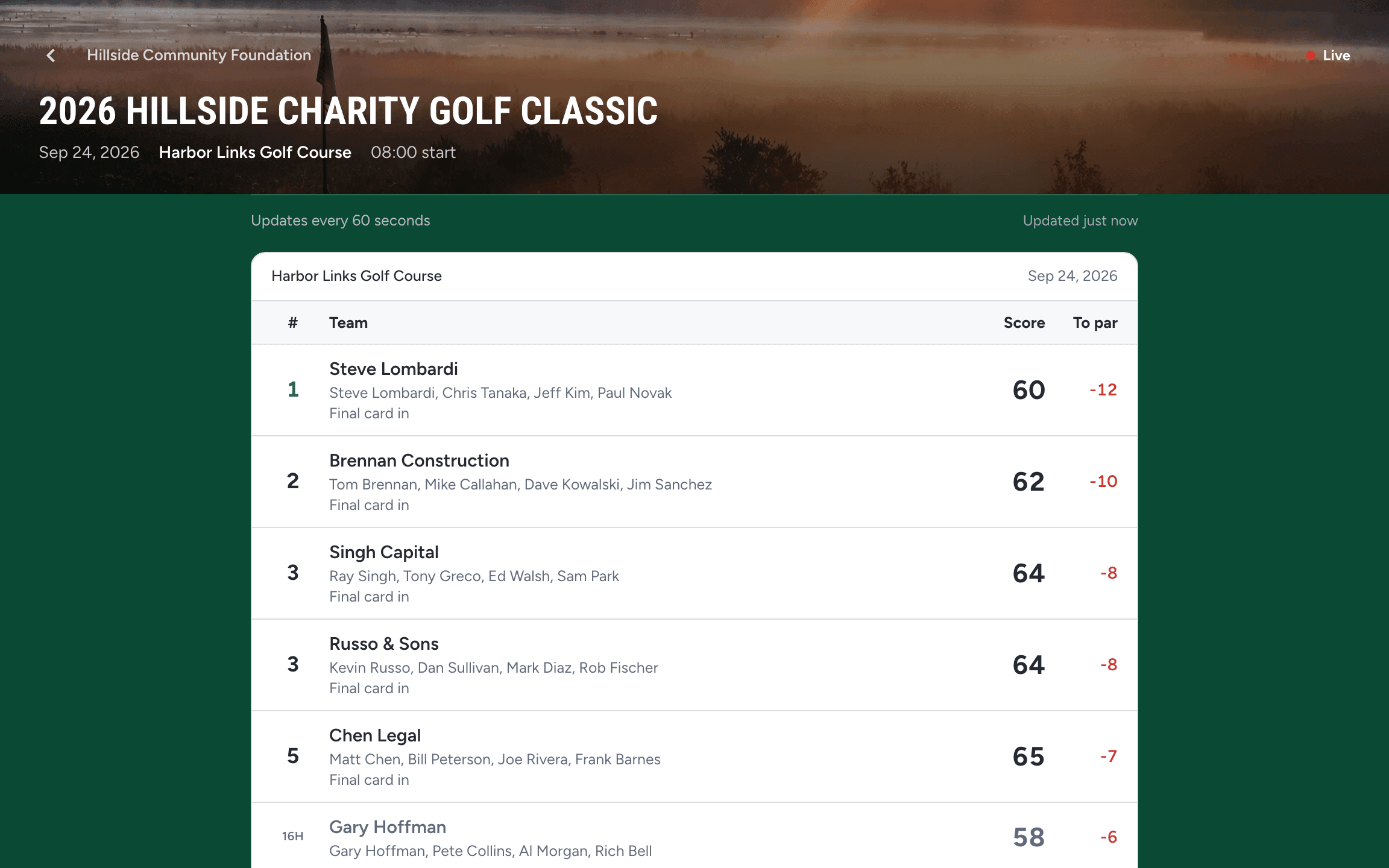
Scoring is one phone per group in the browser, with no download. Most memorial tournaments run a scramble, scored with the one-ball rule; stroke play, Stableford and best ball are there for the years the field wants a contest. A closest to the pin on the person’s favorite hole has its own contest code for the volunteer there. The live leaderboard is a public link, and the clubhouse TV board carries the results, the sponsors and the raised total through the dinner.
The total, the thank-yous and next year
Results go to every registrant by email and the leaderboard stays up. The Money Desk shows what the day raised: card payments, cash sessions, checks and deposits reconciled by method, the expense register against the budget, and the closeout report with revenue by stream and the net proceeds for the cause. Anything still owed sits on the receivables list, each sponsor gets a recap and a printable invoice, and the registration export and the donations list feed the thank-you notes.
Then the part that matters for a memorial: it happens again next year. The event can be duplicated with its packages, sponsor tiers, rounds and display settings intact and a suggested date one year on; registrations, sponsor contracts and payments reset. If the duplicate option is not offered on your event, create next year’s and paste the story and the photo back in.
A memorial in year three: 72 players, a scholarship
Eighteen foursomes, a scramble, a dinner with the family, and a scholarship fund as the cause. Every step is one the product runs today.
- Ten weeks out
- Duplicate last year’s event, set the date, refresh the story and the photograph, and publish this year’s goal; the packages and the three sponsor levels carry over. The announcement goes to last year’s list, and the first donations arrive from people who will not play.
- Weeks 8 to 2
- Local sponsors move to paid and upload logos through the portal, an uncle is registered by hand with his check recorded, and the waitlist opens at the eighteenth foursome.
- Week 1
- Build the groups and shotgun assignments, print the tee sheet, hand the contest code to the volunteer on the person’s favorite par three, and schedule the reminder.
- The day
- Volunteers check players in by scan and take cash and checks in a drawer session while the family greets people. One phone per group scores the scramble, and the TV board shows the leaderboard with the sponsors and the raised total through dinner.
- The week after
- Results by email, the money closed, the closeout report to the scholarship committee, the export and the donations list to the thank-you notes, and the event duplicated for year four.
Worth knowing
- You pay per event when you activate it, with no subscription. A one-day stroke play or scramble event runs free, whatever the field size, which covers a first-year round among close friends.
- The tribute is the page copy, the header image and the goal. There is no photo gallery, guest book or memorial wall; if the family wants those, they live somewhere else and the page links out.
- Parful does not issue charitable tax receipts and is not a donor database. The donations list on the event is the record; acknowledge gifts in whatever the cause already uses.
- A silent auction is part of the paid event plans. Scoring needs a signal; a card desk takes paper cards from a group that had none.
Memorial golf tournament questions
What app handles a memorial golf tournament?
Can people who do not play golf still give?
Can we run the same tournament every year?
Can a local business sponsor a hole in the person's name?
What does it cost?
Give the day one page and run it again next year
Write the story, set the goal and open registration. Pay per event when you activate it; a one-day stroke play or scramble event runs free, with any number of players.
Events is being finished. Existing events keep working; creating new ones opens when it is ready.